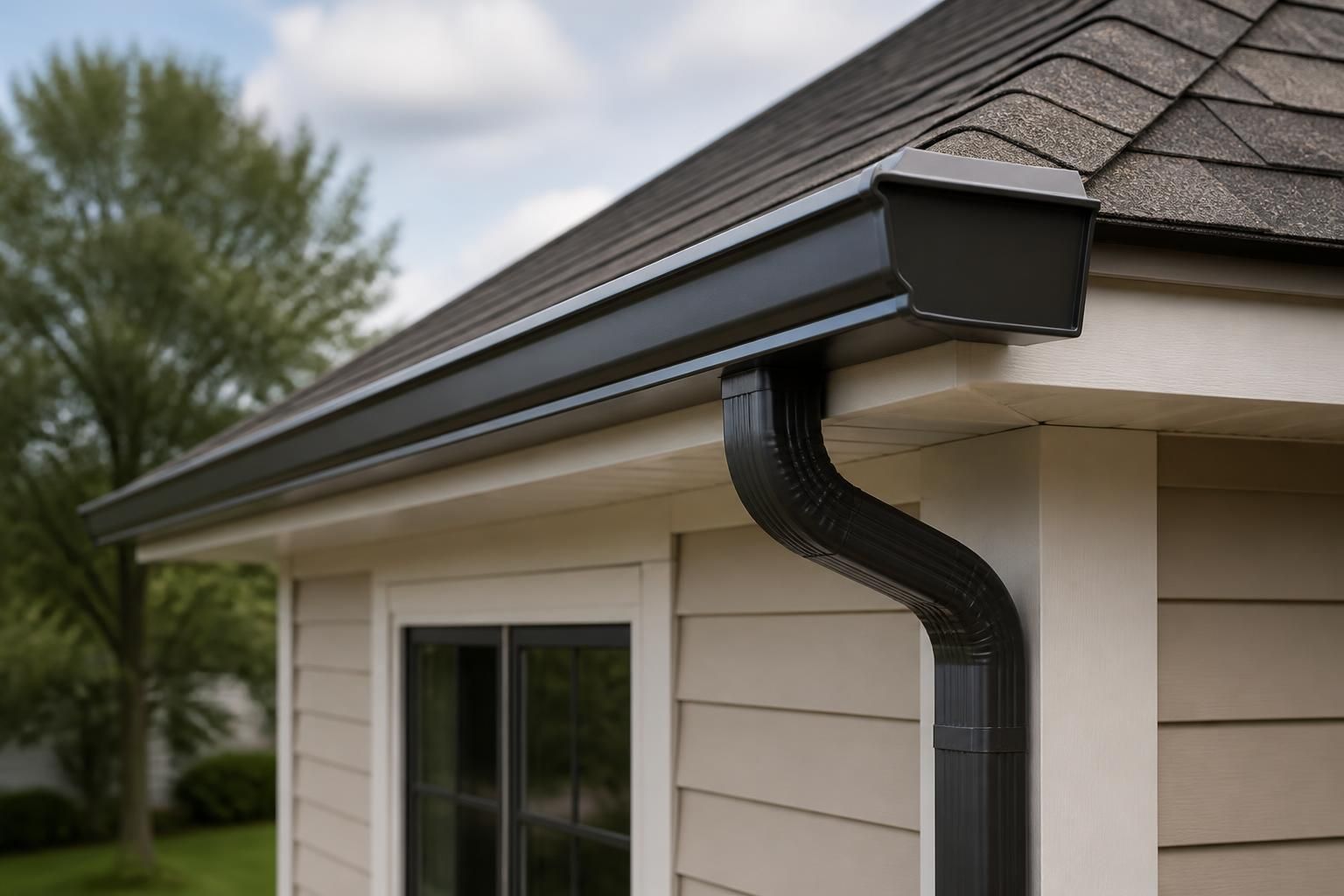
Water that spills past the roof edge, streaks down siding, or pools near the base of your home is more than a nuisance. It can leave behind staining, erosion, and damage that gets worse every time it rains. If your gutters are sagging, cracked, or simply not keeping up, it may be time to look at a new system that matches your roof and moves water where it should go.
Lynchburg Roofing Contractors installs gutters for homeowners and property owners across Lynchburg, VA, with the goal of reducing overflow, protecting exterior materials, and helping your roofline stand up to regular rain. If you are replacing an aging gutter run, finishing a new roof project, or correcting drainage problems that keep coming back, we can help you choose a gutter setup that fits your property and the work it needs.
Gutters often wear out slowly, which makes the warning signs easy to overlook until damage becomes obvious. A new installation may be the right move when repairs no longer keep water where it belongs.
When these problems show up together, a full gutter installation can be the cleaner fix compared with patching one section after another.
We start by looking at the roof edge, existing drainage layout, and the areas where water has been causing trouble. From there, Lynchburg Roofing Contractors plans a gutter system that matches the property’s shape and directs runoff away from places where it can do damage.
This process helps keep the project organized and gives you a clear idea of what is being done at each stage.
Every home has a different roof shape, drainage need, and exterior layout. That is why gutter installation is never a one-size job. The right setup depends on the size of the roof sections, where water collects, and how much runoff your property needs to handle.
Some properties need shorter runs around a porch or addition, while others require longer spans along the main roofline. We look at the layout so the system fits the house instead of fighting it.
The material you choose affects appearance, upkeep, and how well the gutters stand up to regular use. We work with proven options and help you think through what suits the building and the surrounding trim.
Downspouts matter just as much as the gutters themselves. If runoff is discharged too close to the foundation or in the wrong spot, water can collect where it should not. We place them with drainage direction in mind.
Gutters do more than catch rain. They help protect the roof edge, fascia, soffits, siding, and nearby landscaping from repeated water exposure. When gutters are missing or failing, rainwater can run straight off the roof and create wear that spreads beyond the gutter line.
That is why gutter installation is often part of a broader roofing conversation. A roof may look solid from the street, but if the drainage path is not set up well, moisture can still cause trouble at the edges. Lynchburg Roofing Contractors handles gutter work with the roof system as a whole, not as an afterthought.
Storms can expose drainage problems quickly. Even if your gutters looked acceptable before, heavy rain and wind can loosen fasteners, bend sections, or reveal places where water already had a path of its own.
Watch for these changes after a storm:
If the gutter system no longer matches the demands of the roof, new installation can restore a cleaner drainage path before the problem spreads further.
Homeowners usually want the work done with as little disruption as possible. We keep the process straightforward, explain what we find, and stay focused on the parts of the property that affect drainage and roof edge protection.
You can expect us to talk through the condition of the existing gutters, point out any areas that need attention, and explain the installation plan before work begins. If the property has a roof replacement or other roofing work underway, gutter installation can be coordinated so the finished look is clean and the water management setup makes sense from the start.
We review the property, discuss the layout, and identify where water should be directed away from the home.
We handle the installation carefully so the new gutters sit neatly along the roof edge and follow the intended slope.
We check the completed system and make sure the installation matches the plan for drainage and appearance.
Many homeowners wait until the gutters are visibly failing before they call. Others reach out when they notice water problems around the house but are not sure whether gutters are the cause. Both situations are common, and both deserve a closer look.
Lynchburg Roofing Contractors helps property owners across Lynchburg, VA make a practical decision about whether repairs are still worth considering or whether replacement is the cleaner path forward. If the gutter system is undersized, worn out, or no longer suited to the roofline, a new installation can solve more than one problem at once.
Look for sagging sections, repeated overflow, rust, cracked runs, or leaks at the joints. If cleaning and minor fixes do not help, replacement may be the better option.
Yes, if the stains are caused by runoff spilling over the roof edge or leaking from old gutter sections. A new system can redirect water more cleanly.
The gutter layout should follow the roof edge and fit the building shape well, but the exact setup depends on the structure, drainage needs, and roof sections involved.
Old gutters are removed before the new installation when replacement is part of the job. This allows the new system to be set without working around damaged material.
Yes. When roof work is taking place, gutter installation can be planned to complement the finished roof edge and drainage path.
They should be checked regularly, especially after heavy rain or visible debris buildup. This helps catch leaks, separation, or sagging before they spread.
If your gutters are no longer handling runoff the way they should, a new installation can help protect the roof edge and the rest of the property. For gutter installation in Lynchburg, VA, contact Lynchburg Roofing Contractors at +14344482921 or email info@lynchburgroofingcontractors.com to schedule a free, no-obligation estimate.
Get Started
Tell us about your roof, the issue you're seeing, or the project you want to plan. We will help you understand the next step and what service makes the most sense for your property.